April 17, 2013

Art Nouveau


In my opinion, second only to today, the Art Nouveau movement is the most fascinating and dynamic confluence of science and nature, and art. At the end of the nineteenth century, attitudes about the natural world lacked consensus. Nature stood for the decent of man with the new proof of human evolution from animals; it was seen as something to be conquered and displayed as a trophy; with the proliferation of images of far away and previously unseen ecosystems, it was glorified, and inspired awe and fascination in a new way; it was something to flatten and put into order, arranged in an orderly pattern by the artist.

The idea of evolution was not new in 1859 when Charles Darwin published The Origin of Species. The work’s proposal of natural selection based on a multitude of evidence from Darwin’s Beagle expedition was what finally convinced the masses to take the idea more seriously. This new understanding of the human connection with nature inspired many artists to work with the theme. The metaphor of metamorphosis was used again and again in many media addressing how humans are intricately linked to the animal and plant kingdoms. Possibly with less philosophy, many artists worked from expedition notes from far flung lands previously unseen to most Europeans.

Art Nouveau is a complex and fascinating period in art history, especially with respects to nature and our place in it. In this short blog I am only scratching the surface of this rich story, but I recommend to anyone interested in environmental art to explore more.
Alphonse Muncha
Czech, 1860-1939
Master the poster, a new medium due to the ease of reproduction with new technology. Beautiful woman coupled with nature, especially floral motifs were one of Muncha's favorite subjects. 

Ernst Haeckel
German 1834-1919
Haeckel made many illustrations like this one of various types of flora and fauna. Haeckel was not only an artist, but also a biologist and naturalist. He described and named thousands of new species. Many of the species and their diversity were new to the people of Europe. Imagine the impact of seeing the diversity of a coral reef for the first time. 

Ernst Haeckel

Eugene Grasset
Swiss, 1845-1917
Grasset is another of the poster art masters. Here she looks to tenderly and carefully at the flower.  It is clear to see the new interest in the study of nature.

Rene Lalique
French, 1860-1945
One of the most famous Art Nouveau jewelry pieces. Nature and metamorphosis were common themes in jewelry of the time, a medium that was also exploring new technologies and techniques.

Tiffany Studios (1878-1933)
A staple in Art Nouveau decorative art or craft style glass lamps and windows. The Studio was imagined and founded by Louis Comfort Tiffany an American (1848-1933). Tiffany started his artistic life as a painter, but it was his interest in glassmaking that inspired him to found the studio art take his art to Europe.

William Morris
English, 1834-1896
This is a section of Morris wallpaper. Most of his designs relied on curvaceous floral patterns.
Antoni Gaudi
Spanish, 1852-1926
This is the interior of the Chapel in Park Guell. Gaudi's architecture often referred to natural shapes, at times curvaceous  lines and others, as seen here, the interior of a cave. His magnum opus, the Sagrada Familia is, although a bit later, also a good example of this.
Antoni Gaudi
Sagrada Familia
Emile Galle
French, 1846-1904
Galle was a glass master, using new techniques and creating beautiful functional art, often with  a  natural motif.

Emile Galle
Galle, proving that he has talent in multiple mediums.

March 13, 2013

Maria Coryell-Martin


Coryell-Martin has a unique way of working that allows her to travel, paint, and educate (really, what could be better?!). Self-described as an expeditionary artist, Coryell-Martin works both in the studio and in the field. She collaborates with scientists and focuses her art on environmental issues and the natural landscape.

Since 2005, Coryell-Martin’s work has focused on the arctic region, a place suffering acutely from climate change. Her watercolors are as frigid as the ice burgs they represent, while her migrating terns invoke the freedom that only soaring high above the land and ocean from the north pole to the south can.

In many ways, Coryell-Martin works like a naturalist. She travels to a study site, she observes her subject, she records what she experiences through multimedia recordings and field sketches, and then she reports and presents her findings to a larger audience through exhibitions of her work and educational workshops.

More specifically than a naturalist ilk, Coryell-Martin’s work is about science. Her work is about scientific research, representing the people who do science and the tools used in research. The scientific process comes to life through her art, there for the viewer, and/or the reader of her blog to learn about, and experience. This artistic focus on the act of doing science sets her apart in an important way from other “nature” artists who also paint beautiful landscapes and wildlife. Coryell-Martin is advocating for the climate. She is an activist raising awareness about environmental issues and the scientists that are studying them to work towards a better understanding of threats and solutions for a healthy future.

Maria Coryell-Martin working in the field. I can't imagine a better office!


Her field kit. 


Following the Light: Dusk
24" x 24" 
watercolor & gouache


February 15, 2013

Charles Williams

Based in Georgetown, South Carolina, Williams is a landscape/waterscape oil painter. He was honored with a Hudson River Landscape Fellowship and honorable mention in the Southwest Art Magazine’s 21Emerging Under 31 among others. At 29, Williams has had a number of exhibitions and publications.

William's Statement of Purpose: "I explore the relationship between human emotions and the natural environment. These parallel perspectives are the basis for my landscapes channeled onto canvas. Often, it's my perception that I feel compelled to paint a specific landscape. These feelings inspire me to capture honest moments, showing others a glimpse of what's beneath the surface."

Evoking human emotion and relationship with the natural world seems present in William’s quiet, calm, and intimate pieces, but there is something else as well. The majority of his canvas’ surfaces are photorealistic, or at least realistic, imagery while the bottom of many transforms and drips into a pure and raw painted area. He allows the image to fade into a loose and impressionistic abstraction of running paint and vigorous brushstrokes.

The juxtaposition of realism and a glimpse into the process of painting, speaks more to the act of painting and the act of representing the natural worldsthrough art rather than human emotions towards the natural environment. It reminds us that we are looking at a painting, bidding the question of why; why a painting of the natural world; why paint it at all? It is a different way of approaching the subject than taking a photograph or making a sculpture. No, this is a painting, and someone has painted it, someone has been inspired and driven to paint the in, the outs, and everything in between. This, the painter's intimate relationship with his subject, the natural environment, is what speaks most to me about William's work. It is not the human emotion to the natural world, but the artists, William's.


February 12, 2013

Built Green Space: The Future of Land Trusts?

The lapse in time from my last post is not due to lack of inspiration. On the contrary, the post that I started over a week ago just won’t end. There has also been a town-wide Nemo-induced lack of power… As I continue working on it in its fleshed out form, I want to give a shortened version here. Since it is an on-going and evolving project, I welcome your input and critiques.

The United States is projected to be a minority-majority population by the year 2042, meaning that there will be as many minorities as non-hispanic whites. This, along with changes in socio-economic demographics and increased urbanization create a dynamic and ever-changing nation. What will these changes mean for the future of the land trust movement that traditionally has been lead by and served white, fairly well off, educated, middle-aged, land owning populations?

It is important to note that segregation in the land trust movement has been more a function of form and default practices rather than a systematic elitist approach to improving quality of life for the privileged. Maybe it was easy and even acceptable to work in and with a small slice of the population in the past, but today it is counter-productive and irresponsible for the land trust movement not to involve and serve a wider audience.

Considering demographic shifts and the changing priorities of land trusts, eventually moving towards decreased acquisition responsibilities and increased stewardship responsibilities, how will trusts remain effective and meaningful? Who will fill the shoes of today’s conservationists and stewards? Who will care for the ever-growing acreage protected in perpetuity? If we do not evolve our methods today, can we rely on individuals who have been left out of the conversation to take up the cause or even care?

One strategy to diversifying the movement is to get involved in built green space. Built green space is the combination of land conservation, urban open-space, and roof-top gardens. The concept is that land trusts become involved in the multi-faceted work of conserving “built land” or “created land”, bringing land conservation into the urban environment in a new way to serve and engage a more diverse population.

Built green space is essentially green roofs, land that is anthropogenically constructed on a structure or building including gardens, parks, sports fields, and outdoor meeting areas. The “land” could be treated similar to real land in that: its protection could initiate tax breaks; it could be subject to conservation easements; it would benefit biodiversity and help create wildlife corridors; it would lessen the heat island effect and increase permeable surface area in urban settings; it would improve the quality of life for local communities by increasing access to green space, urban garden space, and outdoor recreation opportunities; and it would increase exposure to, and benefits of, land conservation to a more diverse population.

Critics may be quick to point out what they consider insurmountable challenges to a built green space initiative. They might site issues like the legal limitations of our current system to conserve and place an easement on built green space; that it is not true land, and therefore should not concern land trusts; the new set of management and stewardship strategies needed would be cumbersome; etcetera. It is true that new initiatives often come with new challenges and issues to be addressed, but there is so much more to gain than loose from the inclusion of built green space in the land trust movement and our portfolios.

As a system designed and expected to last in perpetuity, the land trust movement must evolve to remain financially and functionally strong, relevant, and meaningful. Built green space embodies many of the values that trusts generally uphold and work for: preservation of green space for the benefit of humans, wildlife; improving ecological functions such as water flow and climate systems; connecting people to the land and creating opportunities for environmental education; and encouraging sustainable and healthy agriculture. With a dynamic future in mind, let’s take the initiative to serve, benefit, and connect to a wider slice of society, benefiting citizens of all kinds, trusts, and the environment.

January 24, 2013

Living art: Flora for beauty and sustainability

This post was inspired by a dream I had last night. I was flying over a cityscape that was blanketed and dripping with lush vibrant gardens. The tops of all the buildings were cultivated into beautiful gardens, and the foliage spilled over their edges and created a city fully alive as a forest.


Incorporating plants into architecture and sustainable design is not just a dream, but reality. Rain gardens, green roofs, and natural filtration systems are an integral part of sustainable and responsible water use and management in our built environment. Plants are also beautiful and can be found in more and more art.


The use of plants in sustainability and art is much too large to talk about in just one post, but here is a whirlwind tour of the possibilities:


Cover it in green:


Mud Maiden
Lost Gardens of Heligan in Cornwall, UK
Susan & Pete Hill

Write and draw in green:


Moss Stencil
Brooklyn, NY
edina tokodi & józsef vályi-tóth
Anna Garforth
Incorperate green into sculpture:
Arbor Lace: 2002
Rockland Center for the Arts, NY
9’ x 4.5’ x 18’
Michele Brody
Make a green wall:


Green your roof:


Green-filter your water:

Rain Garden
John Todd Ecological Design

More to come!

January 17, 2013

Sustainable by Design: The Bullitt Center


One of the most inspiring, and at times frustrating, aspects of moving towards sustainability is that we already have so much of what we need to achieve it. Globally, our knowledge about, and technology for a sustainable world is immense and growing all the time. Implementation is the key to real change. I recently learned about the Bullitt Center, which is a globally significant example of this change.

The building sector, which is usually divided into two categories: residential and commercial,  is responsible for a large section of energy and fossil fuel consumption. It is also considered by some specialists, a sector with significant possibility to reduce consumption and move towards sustainability. S. Pascala and R. Socolow, in their article Stabilization Wedges: Solving the Climate Problem for the Next 50 Years with Current Technologies says, “when energy is examined comprehensively from the end-use perspective, the buildings sector stands out as particularly promising.” (The abstract of this article can read at: http://www.sciencemag.org/content/305/5686/968.abstract) What makes the building sector so promising is that much of the technology for improvement already exists.  

In the building industry there are guidelines for green building standardizations that help guide and track the sustainability of structures. LEED (Leadership in Energy and Environmental Design) “is a voluntary, consensus-based, market-driven program that provides third-party verification of green buildings” (http://new.usgbc.org/leed). LEED has been the leading example of green building verification for many years and has been widely successful in creating standards for sustainability and raising awareness and providing opportunities for education on these issues.  More recently, the Living Building Challenge has been introduced. The Challenge is a certification program that is even more stringent than LEED. The Challenge “is comprised of seven performance areas, or ‘Petals’: Site, Water, Energy, Health, Materials, Equity and Beauty.”The idea of petals stems from the living building concept coined by Jason McLennon, CEO of the Cascadia Green Building Council and leader in the green architecture field, who described the operation of living buildings “as elegantly and efficiently as flowers.”

And now back to the wonderful example of the implementation of existing technology and methods for a sustainable future: the Bullitt Center. The Center has been called the “worlds greenest building”, one reason being that not only does it meet the Living Building Challenge (along with a select few, globally), but it is the largest building ever to achieve such a high standard of sustainability. Most structures to attempt sustainability are relatively small, but the Bullitt Center is a six-story, 50,000 square-foot office building. The extended roof is filled with enough solar panels that it will ideally capture enough sunlight, even in cloudy Seattle, during the summer to fuel the building through the winter. The design also focuses on minimizing electricity use, abundant natural light for inhabitants, geo-thermal heating, rainwater storage, grey water filtering, composting toilets, and a centrally located staircase to encourage a healthy life style.

These are the kind of buildings for a better future: places to live and work that do not harm the environment and irresponsibly use nonrenewable resources, but serve as models of a way forward to a smarter, healthier, and more sustainable world.


The Self-Sufficient Office Building, The New York Times October 4, 2011

Seattle’s Silver Bullitt: A New Office Building Goes Untra-Green, Time Magazine Science & Space June 20, 2012
http://science.time.com/2012/06/20/silver-bullitt/

World’s Greenest Building, Bullitt Center, Opens in Earth Day in Seattle, Triple Pundit, January 16, 2013

The Bullitt Center

Living Building Challenge

LEED

January 7, 2013

Chris Jordan

Jordan grew up in Connecticut, but now works in Seattle, WA. After studying to be a lawyer, Jordan decided to devote his time and energy to being an artist. His main medium is photography and digital photographic collage.

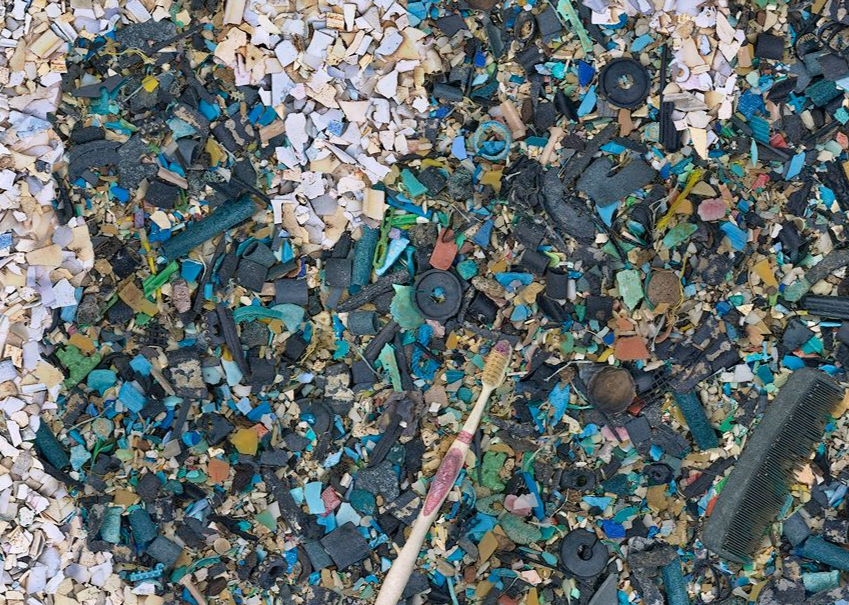
Jordan focuses on themes in our society that stem from subconscious habits, cultural norms and trends such as mass consumption, high school dropout rates, plastic pollution in the oceans, and environmental destruction.

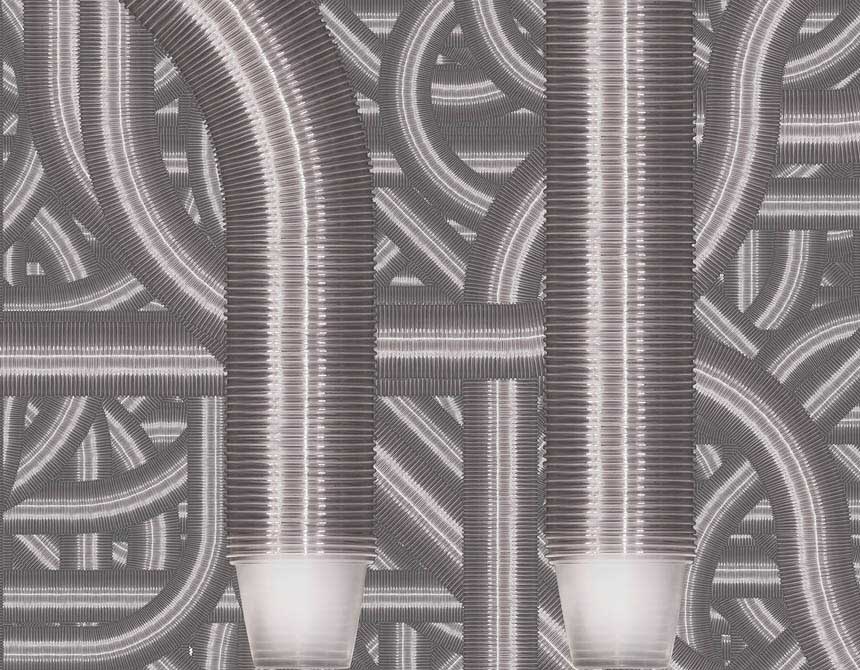
In his collage work, Jordan visually illustrates statistics so that the viewer can more fully understand and feel the magnitude of the information. Piecing together thousands of small images, he creates composite images that are both beautiful and powerful.

The statistics often focus on habits or norms that when done individually seem inconsequential, but collectively have incredible consequences on our society and our environment. These may be habits that we do individually, like get a fist full of plastic bags at the grocery store; or we do culturally, such as incarcerate a larger percentage of our population than any other country; and often have environmental implications, like over-fish the oceans.

I have transcribed a section of Jordan’s TED talk from 2008 (find the link below). His own words say it all:

“…the reason that I do this is it’s because I have this fear that we aren’t feeling enough as a culture right now. There’s this kind of anesthesia in America at the moment. We’ve lost our sense of outrage, our anger, and our grief about what’s going on in our culture right now, what’s going on in our country, the atrocities that are being committed in our names around the world. They’ve gone missing; these feelings have gone missing. Our cultural joy, our national joy is nowhere to be seen. And one of the causes of this I think is that as each of us attempts of build this new kind of world view, this whole optical world view, the holographic image that we are all trying to create in our mind of the interconnection of things, the environmental footprints a thousand miles away of the things that we buy the social consequences ten thousand miles away of the daily decisions that we make as consumers as we try to build this view and try to educate ourselves about the enormity of our culture, the information that we have to work with, is these gigantic numbers, things in, numbers in the millions, in the hundreds of millions and in the billions, and now the trillions, Bush’s new budget is in the trillions. These are numbers that our brains don’t have the ability to comprehend. We can’t make meaning out of these enormous statistics. And so that’s what I am trying to do with my work, is to take these numbers, these statistics from the raw language of data and to translate them into a more universal visual language that can be felt. Because my belief is that if we can feel these issues, if we can feel these things more deeply, then they’ll matter to us more than they do now. And if we can find that, then we will be able to find within each one of us, what it is that we need to find to face the big question, which is how do we change. That to me is the big question that we face as a people right now, is how do we change…”

Environmental issues in particular are extremely complex and often measured in very large numbers. I am sure that some of the brush-off and complacent attitudes towards environmental issues stem from a lack of true understanding and comprehension. Without understanding the seriousness of environmental destruction, climate change and their effects, it is silly to assume people will feel compassionate and/or be inspired to change the status quo. The key in Jordan’s work is making the viewer feel the numbers, feel the statistics, and feel their implications so that we can work on changing for a better world.  

Chris Jordan's website:

Chris Jordan: Turning powerful stats into art, a TED Talk


Intolerable Beauty: Portraits of American Mass Consumption
Cell phones #2, Atlanta 2005 44 x 90"
Running the Numbers II: Portraits of global mass culture
 
 
Running the Numbers: An American Self-Portrait

 
Running the Numbers: An American Self-Portrait


Midway: Message from the Gyre